
Equipment Lease
How Much Does It Cost to Hire a Carmix in Kenya? (2026 Guide)
Jun
If you’re planning a construction project in Kenya and wondering whether to hire a Carmix self-loading concrete mixer, you’ve come to the right place. Whether you’re building a residential slab in Nairobi, laying culverts on a rural road in Kisumu, or working on a remote infrastructure project in the highlands, this guide breaks down everything you need to know — including real hire rates, what’s included (and what’s not), and how to get the best deal.
What Is a Carmix?
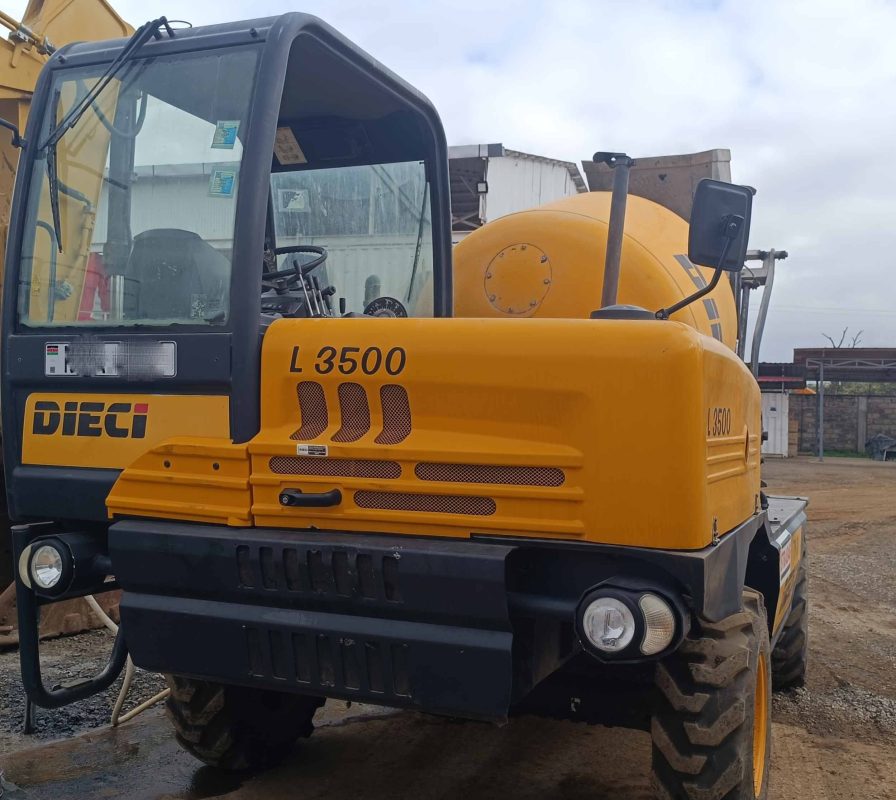
A Carmix is a self-loading concrete mixer — essentially a mobile batching plant on wheels. Unlike a standard transit mixer that arrives with ready-mixed concrete, a Carmix loads its own aggregates (sand, ballast, cement), mixes them on-site, and discharges the fresh concrete exactly where you need it.
This makes it ideal for:
- Remote construction sites far from the nearest batching plant
- Road and bridge works in upcountry Kenya
- Residential foundations and slabs in urban and peri-urban areas
- Sites with access challenges — the Carmix’s 4WD and high ground clearance handle muddy, uneven terrain that would stop a standard transit mixer
One operator can run the entire machine: loading, mixing, and pouring — making it a cost-efficient choice for projects of all sizes.
Carmix Hire Rates in Kenya (2026)
Carmix hire in Kenya is typically quoted as a dry rate — meaning the machine and operator are provided, but fuel and raw materials (cement, sand, ballast, water) are not included in the base price.
Typical Day Rates
| Machine Type | Capacity | Estimated Dry Hire Rate |
|---|---|---|
| Self-Loading Concrete Mixer (Standard) | 2.5 – 3.5 m³ | KSh 30,000 – 40,000 / day |
| Self-Loading Concrete Mixer (Large) | 4 m³ | KSh 40,000 – 55,000 / day |
| Self-Loading Concrete Mixer (Premium/New) | 5 m³+ | KSh 50,000 – 70,000 / day |
Note: These are estimated market rates as of 2026 and will vary based on location, machine condition, hire duration, and negotiation.
Monthly Rates
For long-duration projects — road construction, large housing developments — monthly hire offers significant savings. Monthly rates typically range from KSh 700,000 – 1,200,000, depending on machine size and the scope of work.
What’s Included in the Hire Rate?
When you hire a Carmix in Kenya, the dry rate typically covers:
- The machine itself
- A trained operator
- Basic maintenance during the hire period
Not included (you cover separately):
- Diesel fuel (the Carmix is a heavy diesel consumer — budget KSh 8,000 – 15,000/day depending on usage)
- Operator allowance / subsistence (usually KSh 500 – 1,500/day)
- Mobilisation / transport to site (varies by distance — can be KSh 5,000 – 30,000+)
- Cement, sand, ballast, and water
- VAT (16%)
Always ask for a full cost breakdown before signing any agreement. The headline dry rate can look affordable until transport and fuel are added.
What Factors Affect the Hire Cost?
1. Location
Nairobi and major towns with high equipment availability tend to have more competitive rates. Remote counties — Turkana, Mandera, Marsabit — attract premium prices due to limited supply and higher mobilisation costs.
2. Hire Duration
The longer you hire, the lower your effective daily rate. A 1-day hire costs significantly more per day than a weekly or monthly contract. Always negotiate for a better rate if you need the machine for more than 3 days.
3. Machine Capacity
A 4 m³ Carmix produces significantly more concrete per cycle than a 2.5 m³ machine. Match the capacity to your project needs — oversizing costs more per day but may save time on large pours.
4. Machine Condition and Age
Newer, well-maintained machines command higher rates but reduce the risk of costly downtime on your project. Always inspect the machine or request photos before committing.
5. Wet vs. Dry Rate
Some providers offer a wet rate — where fuel is included. This is often more transparent for budgeting but tends to cost KSh 10,000 – 20,000 more per day than the dry equivalent.
6. Season and Demand
During peak construction seasons — January to March and July to October — equipment availability tightens and rates may rise. Book early, especially for projects requiring machines upcountry.
Carmix vs. Ready-Mix Concrete: Which Is Cheaper?
This is a question every project manager asks. Here’s an honest comparison:
| Factor | Carmix Hire | Ready-Mix Concrete |
|---|---|---|
| Cost control | High — you control mix ratios | Lower — price per m³ is fixed |
| Remote sites | Excellent — fully off-road capable | Poor — transit mixers can’t access remote terrain |
| Urban tight sites | Good — compact footprint | Challenging — large transit trucks need space |
| Speed (large pours) | Moderate — one machine, continuous supply | Fast — multiple trucks can arrive in sequence |
| Minimum order | None | Usually 3–6 m³ minimum |
| Wastage | Very low | Can be higher if timing is off |
Bottom line: For remote sites, small-to-medium pours, and projects where access is difficult, a Carmix hire almost always wins on value. For very large urban pours (100 m³+), ready-mix can be faster.
ere to Hire a Carmix in Kenya
Carmix hire is available across Kenya, with the highest concentration of providers in:
- Nairobi (Mombasa Road, Industrial Area, Thika Road)
- Mombasa
- Nakuru
- Kisumu
- Eldoret
Providers with countrywide reach can mobilise to any county, though mobilisation costs apply. Always confirm lead time — most suppliers require 24–48 hours’ notice for deployment.
Ready to Hire a Carmix?
weighing Scales Kenya offers reliable Carmix and heavy equipment hire across Kenya. Our self-loading concrete mixers are well-maintained, operated by trained professionals, and available for hire by the day, week, or month.
📞 Call/WhatsApp: +254728753807 📍 Serving Nairobi and countrywide
Get in touch today for a free, no-obligation quote tailored to your project.
